 Traveling Knife Gal
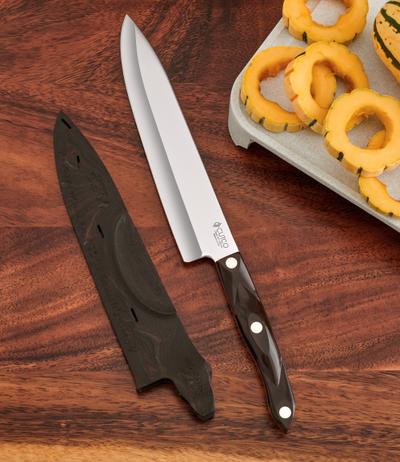
An example of 440A high-carbon stainless
Cutco 9-1/4" French Chef #1725
Cutco uses AISI 440A high-carbon stainless steel, heat-treated through a hot, deep-freeze and temper process for hardness, toughness, corrosion resistance and edge holding.
- Blade
- 9-1/4 inches
- Edge
- Straight edge, 15° per side
- Steel
- 440A high-carbon stainless
- Build
- Full tang, 3 nickel-silver rivets
- Made in
- Olean, New York
- Guarantee
- Forever Guarantee with free sharpening
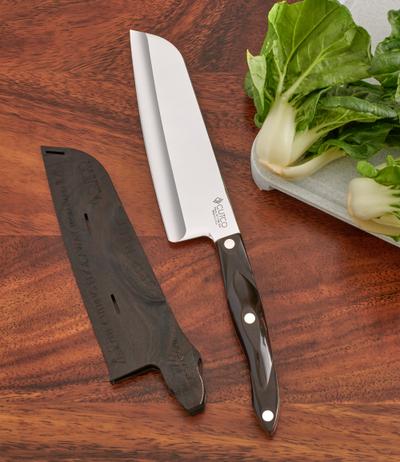
Kitchen knife steels trade off hardness (edge retention), toughness (resistance to chipping) and corrosion resistance. Stainless steels like 440A, 420 and German X50CrMoV15 are tough and easy to care for. Harder Japanese steels like VG-10 and powder steels hold a very fine edge but can chip. Carbon steels sharpen beautifully but rust. Heat treatment and edge geometry matter as much as the alloy.
The three trade-offs
- Hardness (edge retention): harder steel holds a sharp edge longer.
- Toughness: tougher steel flexes instead of chipping or snapping.
- Corrosion resistance: chromium (roughly 12 percent or more) makes steel "stainless."
No steel maxes out all three. Every knife is a balance.
Steel families
| Family | Examples | Good at | Watch out for |
|---|---|---|---|
| Stainless / high-carbon stainless | 420, 440A, 4116, German X50CrMoV15 | Tough, rust resistant, easy care, easy to touch up | Needs sharpening more often than the hardest steels |
| Hard Japanese stainless | VG-10, AUS-10, powder steels like SG2 | Very fine, long-lasting edge | Thin edges can chip on bones, frozen food or twisting |
| Carbon steel | 1095, Japanese white and blue steel | Takes a razor edge, easy to sharpen | Rusts and stains; must be dried right away; develops a patina |
What HRC means
Hardness is measured on the Rockwell C scale (HRC). Western kitchen knives typically sit in the mid to upper 50s; many Japanese knives run around 60 to 63. Higher numbers hold an edge longer but are more brittle and harder to sharpen.
What Cutco uses
Cutco blades are AISI Type 440A high-carbon stainless steel. Cutco heat-treats them by heating to about 1850 to 1950°F, cooling to -120°F, and tempering at 400°F, for hardness, toughness, corrosion resistance and edge-holding. (Vegetable peelers use 420; Table Knife blades use 4116.) The blades are hollow ground and polished, and Cutco's Double-D® edge adds recessed points that protect the edge. See the Double-D edge explained.
What really matters
For a home cook, a tough, rust-resistant steel that's sharpened regularly beats an exotic steel that chips and stays dull in a drawer. Heat treatment, edge geometry and a sharpening plan matter more than the alloy name. That's why free lifetime sharpening is worth as much as the steel itself.
Questions
What steel does Cutco use?
AISI Type 440A high-carbon stainless steel, heat-treated for hardness, toughness, corrosion resistance and edge holding.
Is high-carbon stainless steel good for knives?
Yes. It combines good edge holding with rust resistance and easy care.
Is carbon steel better than stainless?
Carbon steel takes a keen edge and is easy to sharpen, but it rusts and stains. Stainless is lower maintenance.
What is a good HRC for a kitchen knife?
Most kitchen knives fall between the mid 50s and low 60s. Harder holds an edge longer but is more brittle.
Keep reading
Sources: Cutco: Just the Facts · Cutco: How Cutco Knives Are Made